• 972-499-3593
    Eminent Spine
    • Timeline
    • The Sword of Eminent
    • Products
          • 3D Titanium Pedicle Screw System
          • Scoliosis Deformity
          • Cervical Implants
            • Cervical Stand-Alone
            • Cervical Plate
            • Cervical IBFD
          • SI Systems
            • Lateral SI
            • Posterior SI
          • Lumbar Systems
            • ALIF Stand-Alone (3D Titanium)
            • ALIF (PEEK)
            • Pedicle Screw
            • 3D PLIF & TLIF
            • PLIF
            • TLIF
            • LLIF
            • Buttress Plate
          • Prep Sets
            • SI Prep Sets
            • Cervical Stand-Alone Prep Sets
            • Cervical Plate Prep Sets
            • ALIF Prep Sets
            • PLIF/TLIF Prep Sets
            • Pedicle Screw Prep Sets (Open & MIS)
          • Kyphoplasty
          • Biologics
    • Resources
      • Surgical Technique Manuals
      • White Papers & Usage Reports
      • IFU’s
      • Blog
    • Case Studies
    • Contact
    • Menu Menu

    ALIF vs. TLIF vs. PLIF: How Surgeons Choose a Lumbar Fusion Approach

    When a patient needs lumbar fusion, the operative approach isn’t one-size-fits-all. Three of the most commonly performed interbody fusion techniques, anterior lumbar interbody fusion (ALIF), transforaminal lumbar interbody fusion (TLIF), and posterior lumbar interbody fusion (PLIF), each offer a distinct set of advantages, tradeoffs, and ideal indications. Understanding how surgeons weigh these options is essential for anyone involved in spine care, from surgical teams to the implant engineers designing the tools they rely on.

    This article breaks down each approach, the clinical factors that drive surgeon decision-making, and how implant design influences outcomes.

    What They All Have in Common

    ALIF, TLIF, and PLIF share the same fundamental goal: remove damaged disc material, restore disc height, and create the biological and mechanical conditions needed for two adjacent vertebrae to fuse. Each technique uses an interbody cage packed with bone graft or biologics to fill the disc space and promote bony ingrowth.

    Despite that shared objective, the route to the disc space, the degree of neural decompression achievable, and the biomechanical profile of each technique differ in ways that meaningfully shape patient selection.

    ALIF: The Anterior Approach

    In an anterior lumbar interbody fusion, the surgeon accesses the lumbar spine from the front of the body. Working with a vascular surgeon to retract the major vessels, the operative team approaches the disc directly through the retroperitoneal corridor. This anterior access allows for near-complete disc removal and placement of a large, lordotic cage without disturbing the posterior musculature at all.

    Advantages

    The anterior corridor offers the largest possible cage footprint, maximizing endplate coverage and fusion surface area while reducing subsidence risk. It also provides superior lordosis correction. A highly lordotic cage placed through the anterior approach can restore natural lumbar curvature more effectively than posterior techniques, making ALIF particularly valuable when correcting flat-back deformity. Because the posterior muscles are never touched, patients don’t experience the paraspinal disruption associated with posterior approaches.

    Eminent Spine’s ALIF Stand-Alone system is engineered to maximize endplate coverage and restore segmental lordosis, with a 3D titanium architecture that supports osseointegration from day one.

    Limitations

    Anterior vascular exposure carries inherent risks including retrograde ejaculation, vascular injury, and ileus. ALIF also doesn’t allow for direct neural decompression. Indirect decompression via disc height restoration is the mechanism, which means it’s not the right choice when posterior pathology like facet disease or central stenosis is the primary pain generator. Most cases also require a co-surgeon for vascular access, adding OR coordination complexity.

    Best candidate: Patients with significant disc degeneration, lumbar flat-back deformity, adjacent segment disease, or cases where lordosis correction is a primary surgical goal.

    Our team works directly with surgeons to match the right implant to the right technique. Get in touch to talk through your case or request product information.

    Contact Us

    TLIF: The Workhorse of Posterior Fusion

    Transforaminal lumbar interbody fusion has become one of the most widely used lumbar fusion techniques in modern spine surgery. The surgeon approaches from the back through a unilateral posterior-lateral corridor, removing the facet joint on one side to access the disc space and place a single interbody cage. It’s versatile, well-studied, and well-suited to minimally invasive techniques.

    Advantages

    TLIF requires only a single posterior incision, eliminating the need for a second surgical team or a separate access procedure. The transforaminal corridor also allows for direct neural decompression on the operative side while the interbody cage is being placed. Because the approach works through the foramen rather than centrally, it requires less neural retraction than PLIF, reducing the risk of nerve root injury. TLIF also adapts well to MIS techniques with percutaneous pedicle screw systems and tubular retractors, which minimizes muscle disruption and supports faster recovery.

    Eminent Spine’s 3D PLIF & TLIF cages use a porous titanium architecture designed to encourage vascular ingrowth and long-term fusion stability, combining structural reliability with the biological advantages of a highly interconnected pore structure.

    Limitations

    The unilateral approach limits complete disc removal to one side, and cage footprint is smaller than what’s achievable with ALIF, though modern implant geometry has narrowed that gap considerably. Lordosis correction is achievable but generally less pronounced than with ALIF. Facetectomy also typically requires supplemental posterior pedicle screw fixation.

    Best candidate: Patients with spondylolisthesis, foraminal stenosis, or unilateral radiculopathy where posterior decompression and interbody fusion are both needed through a single approach.

    Our team works directly with surgeons to match the right implant to the right technique. Get in touch to talk through your case or request product information.

    Contact Us

    PLIF: Bilateral Posterior Access

    Posterior lumbar interbody fusion is an older technique with a long clinical history, and it remains relevant in the right scenario. Unlike TLIF’s unilateral approach, PLIF works bilaterally. The surgeon retracts the dural sac to access both sides of the disc space and places two smaller cages symmetrically, providing balanced bilateral structural support across the motion segment.

    Advantages

    Bilateral cage placement offers symmetric support that TLIF’s single-cage construct can’t replicate. The approach also allows for simultaneous bilateral decompression, which is particularly useful when bilateral stenosis or symmetric radiculopathy is present. PLIF has decades of outcomes data behind it, and it’s often a practical choice in revision cases or when symmetric posterior support is the biomechanical priority.

    Limitations

    The bilateral exposure requires more extensive posterior muscle disruption than TLIF. It also demands bilateral retraction of the thecal sac, increasing the risk of dural tear and nerve root injury. PLIF is generally associated with more blood loss and longer operative time than TLIF, and the smaller cage size limits lordosis restoration compared to what’s achievable with ALIF.

    Best candidate: Patients with bilateral radiculopathy, multi-level disease, or cases where symmetric posterior decompression and bilateral structural support are specifically indicated.

    How Surgeons Actually Make the Decision

    In practice, approach selection isn’t made in isolation. Surgeons weigh a combination of clinical, anatomical, and patient-specific factors, and often the right answer isn’t obvious until imaging and patient history are reviewed together.

    When sagittal alignment restoration is a priority, ALIF’s superior lordosis potential frequently tips the decision. A single highly lordotic ALIF cage can restore significant segmental lordosis that would require multiple posterior maneuvers to approximate. When direct neural decompression is necessary, particularly for foraminal or central stenosis, a posterior approach is almost always preferred. TLIF handles most unilateral cases effectively, while PLIF is considered when bilateral decompression is the primary driver.

    Patient anatomy also plays a significant role. BMI, prior abdominal surgeries, vascular anatomy, and bone quality all influence which approach is feasible. A patient with significant prior retroperitoneal surgery may not be a good ALIF candidate regardless of the deformity picture. Surgeon training matters too. The best approach is always the one the surgeon can execute safely and reproducibly.

    Finally, implant design has a real impact on outcomes. The approach sets the stage, but the implant determines much of what happens next. Cage geometry, material, and surface technology directly affect fusion rates, subsidence risk, and load distribution across the endplate. A 3D-printed titanium cage with a porous, interconnected structure behaves differently at the bone-implant interface than a smooth PEEK implant, and that difference compounds over the life of the fusion.

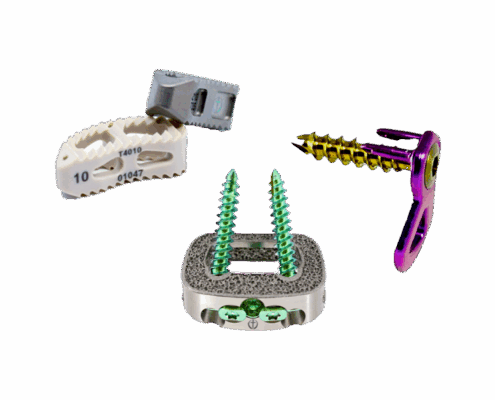
    The Right Approach for the Right Patient

    No single lumbar fusion technique is universally superior. ALIF, TLIF, and PLIF each have a place in the modern spine surgeon’s toolkit, and outcomes data consistently shows that patient selection and surgical execution matter more than the approach itself.

    What does matter is having access to implants designed to perform within the specific biomechanical demands of each corridor. Explore Eminent Spine’s full lumbar implant portfolio to see how each system is engineered to support your preferred approach, from 3D titanium ALIF stand-alone constructs to TLIF and PLIF cages built for osseointegration and long-term stability.

    Share This Post

    • Share on Facebook
    • Share on X
    • Share on WhatsApp
    • Share on Pinterest
    • Share on LinkedIn
    • Share on Tumblr
    • Share on Vk
    • Share on Reddit
    • Share by Mail

    More Like This

    Lumbar Product Parent Header Image

    What Is Lumbar Revision Surgery: A Guide to the Implants Involved

    https://www.eminentspine.com/wp-content/uploads/2025/09/Lumbar-Product-Parent-Header-image.png 1250 2000 Abstrakt Marketing /wp-content/uploads/2025/08/ES-Logo-Edit-2.png Abstrakt Marketing2026-06-01 16:43:002026-06-01 16:43:07What Is Lumbar Revision Surgery: A Guide to the Implants Involved

    Categories

    • 3d Pedicle Screw Education & Persuasion
    • Lumbar Fusion
    • Miscellaneous
    • SI Joint Solutions
    • Spinal Implant Education
    • Spinal Implant Innovation
    Es Logo Edit

    Products

    3D Titanium Pedicle Screw System

    SI

    Scoliosis Deformity

    Cervical Implants

    Lumbar Systems

    Prep Sets

    Biologics

    Resources

    Surgical Technique Manuals

    Case Studies

    White Papers & Usage Reports

    IFU’s

    1-2 Page Product Information

    Contact

    2004 Ventura Dr. Ste 250
    Plano TX 75093

    972.499.3593

    [email protected]

    Website by Abstrakt Marketing Group ©
      • Sitemap
      • Privacy Policy
      Link to: What Is Lumbar Revision Surgery: A Guide to the Implants Involved Link to: What Is Lumbar Revision Surgery: A Guide to the Implants Involved What Is Lumbar Revision Surgery: A Guide to the Implants InvolvedLumbar Product Parent Header Image
      Scroll to top Scroll to top Scroll to top

      This site uses cookies. By continuing to browse the site, you are agreeing to our use of cookies.

      AcceptLearn more

      Cookie and Privacy Settings


      How we use cookies

      We may request cookies to be set on your device. We use cookies to let us know when you visit our websites, how you interact with us, to enrich your user experience, and to customize your relationship with our website.

      Click on the different category headings to find out more. You can also change some of your preferences. Note that blocking some types of cookies may impact your experience on our websites and the services we are able to offer.

      Essential Website Cookies

      These cookies are strictly necessary to provide you with services available through our website and to use some of its features.

      Because these cookies are strictly necessary to deliver the website, refusing them will have impact how our site functions. You always can block or delete cookies by changing your browser settings and force blocking all cookies on this website. But this will always prompt you to accept/refuse cookies when revisiting our site.

      We fully respect if you want to refuse cookies but to avoid asking you again and again kindly allow us to store a cookie for that. You are free to opt out any time or opt in for other cookies to get a better experience. If you refuse cookies we will remove all set cookies in our domain.

      We provide you with a list of stored cookies on your computer in our domain so you can check what we stored. Due to security reasons we are not able to show or modify cookies from other domains. You can check these in your browser security settings.

      Other external services

      We also use different external services like Google Webfonts, Google Maps, and external Video providers. Since these providers may collect personal data like your IP address we allow you to block them here. Please be aware that this might heavily reduce the functionality and appearance of our site. Changes will take effect once you reload the page.

      Google Webfont Settings:

      Google Map Settings:

      Google reCaptcha Settings:

      Vimeo and Youtube video embeds:

      Accept settingsHide notification only