
• 972-499-3593
    Eminent Spine
    • Timeline
    • The Sword of Eminent
    • Products
          • 3D Titanium Pedicle Screw System
          • Scoliosis Deformity
          • Cervical Implants
            • Cervical Stand-Alone
            • Cervical Plate
            • Cervical IBFD
          • SI Systems
            • Lateral SI
            • Posterior SI
          • Lumbar Systems
            • ALIF Stand-Alone (3D Titanium)
            • ALIF (PEEK)
            • Pedicle Screw
            • 3D PLIF & TLIF
            • PLIF
            • TLIF
            • LLIF
            • Buttress Plate
          • Prep Sets
            • SI Prep Sets
            • Cervical Stand-Alone Prep Sets
            • Cervical Plate Prep Sets
            • ALIF Prep Sets
            • PLIF/TLIF Prep Sets
            • Pedicle Screw Prep Sets (Open & MIS)
          • Kyphoplasty
          • Biologics
    • Resources
      • Surgical Technique Manuals
      • White Papers & Usage Reports
      • IFU’s
      • Blog
    • Case Studies
    • Contact
    • Menu Menu

    Treatment for Loose Pedicle Screws: Why It Happens and What It Costs

    Pedicle screws are the anchor points of spinal fusion surgery, and when they fail, the consequences ripple outward fast. Treatment for loose pedicle screws is among the most demanding clinical and financial challenges in spine care. Understanding the root causes of loosening is the clearest path toward preventing it in the first place.
    What Is Pedicle Screw Loosening?

    Pedicle screw loosening refers to the loss of stable fixation between a screw and the surrounding bone after spinal fusion surgery. A properly placed screw integrates with the bone over time, creating a secure bond that supports the entire fusion construct. When that integration breaks down, the screw migrates, wobbles, or loses its grip entirely.

    The result is an unstable construct that can lead to persistent pain, failed fusion, and the eventual need for intervention. Loosening is not always immediately visible on imaging, which is part of what makes it a deceptively difficult complication to catch in its early stages.

    Why Do Pedicle Screws Loosen?

    Loosening rarely has a single cause. It is typically the convergence of patient biology, surgical variables, and implant characteristics that work together to compromise fixation over time. Knowing which factors carry the most weight helps surgeons and clinical teams make more informed decisions before the first incision is made.

    Patient-Related Factors

    Bone quality plays a central role in fixation success. Patients with osteoporosis or low bone mineral density have less cortical and cancellous bone available to anchor a screw, which directly reduces pedicle screw pullout strength. Age-related bone loss, certain medications, and metabolic conditions can all compromise the bone-implant interface before the healing process even has a chance to begin.

    Surgical Technique Variables

    Screw trajectory and pilot hole preparation both influence whether a construct holds over time. An undersized or overdrilled hole reduces the contact area between the screw threads and bone. Improper angulation during placement can introduce stress concentrations at the screw tip, accelerating the breakdown of fixation. Intraoperative decisions, including the choice of open versus minimally invasive technique, also affect how much tissue disruption occurs and how that disruption ultimately shapes the healing response.

    Implant Design and Surface Technology

    A spinal implant’s pedicle screw design is one of the most controllable variables in the loosening equation. Traditional machined titanium surfaces offer limited texture at the bone-implant interface, which can restrict osseointegration and reduce long-term fixation strength. Implants with porous, trabecular surface structures, such as those produced through 3D printing, create a scaffold that mimics cancellous bone and invites meaningful bone in-growth. This enhanced integration at the cellular level is a significant factor in reducing the loosening rates that make spinal implant fixation failure such a costly outcome.

    Surgeons who want to understand how surface architecture directly influences bone in-growth and long-term fixation can explore the science behind surface technology in 3D pedicle screws and osseointegration.

    Find Out More

    The Clinical Consequences of a Loose Pedicle Screw

    A loose screw in a spinal fusion construct does not just cause discomfort. It signals a breakdown in the entire mechanical system the surgery was designed to create. As the construct loses stability, adjacent segments are exposed to abnormal motion and irregular load distribution. Patients often experience a return of the pain that originally brought them to surgery, along with new neurological symptoms in some cases.

    The longer loosening goes unaddressed, the more the surrounding tissue and bone may be compromised, narrowing the options available by the time intervention becomes necessary.

    What Does Treatment for Loose Pedicle Screws Actually Involve?

    Treatment for loose pedicle screws depends on the severity of loosening, the patient’s overall health, and how far the instability has progressed within the adjacent anatomy. There is no single protocol that applies across the board, and the approach shifts considerably depending on where a patient falls on the spectrum from early-stage loosening to full construct failure.

    Conservative Management

    When loosening is identified early and the construct has not yet destabilized significantly, conservative management is typically the first line of response. Physical therapy, activity modification, and targeted pain management can reduce symptomatic burden in the short term. However, conservative care does not address the mechanical failure itself. For most patients with confirmed loosening, it functions as a bridge rather than a resolution, and the clinical picture requires ongoing monitoring to determine whether surgical intervention will become necessary.

    Surgical Revision

    When loosening has progressed to the point of construct failure or significant patient deterioration, surgical intervention becomes the necessary path forward. Revision spine surgery to address loose pedicle screws typically involves removal of the failed hardware, thorough preparation of the screw channels, and re-instrumentation with appropriately sized or augmented fixation. The complexity of revision work is substantially higher than primary surgery because the surgeon is operating in a previously instrumented field with altered tissue planes and potentially compromised bone stock.

    Bone Augmentation

    In cases where the host bone has been meaningfully degraded, re-instrumentation alone may not provide adequate fixation. Bone cement augmentation is used in select patients to reinforce the screw channels before new hardware is placed, improving pullout resistance in osteoporotic or otherwise compromised bone. The decision to augment depends on imaging findings, bone density data, and the surgeon’s intraoperative assessment of the remaining bone quality at each screw site.

    How Much Does a Spine Surgery Cost?

    When a surgical team or patient inquires about revision spine surgery costs, the answer is rarely simple. Revision procedures carry significantly higher costs than primary fusion surgeries, driven by longer operating room time, increased implant complexity, extended hospital stays, and intensive post-operative care. Estimates for revision spinal fusion in the United States frequently exceed primary surgery costs by a factor of two or more, and that figure does not account for the broader downstream burden on patients, payers, and practices.

    The full financial impact of pedicle screw loosening extends across several areas:

    • Lost productivity for the patient during a second, often longer, recovery period
    • Potential liability exposure if loosening is linked to documented implant or surgical factors
    • Insurance reauthorization challenges and possible payer denials for revision procedures
    • Reputational risk for the surgical practice if revision rates rise above established benchmarks

    Eminent Spine and the Future of Fixation

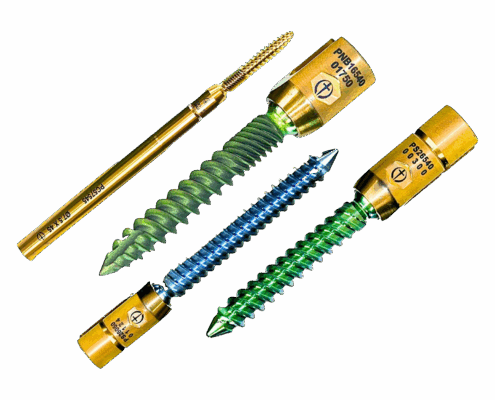
    Treatment for loose pedicle screws is a problem the spine community cannot afford to treat as inevitable. Eminent Spine was built on the principle that implant design should solve for the complications that cost surgeons, patients, and healthcare systems the most. Our 3D Titanium Pedicle Screw System is the first and only FDA 510(k) cleared 3D titanium pedicle screw in the world, engineered from the surface up to promote the kind of bone integration that makes loosening a far less likely outcome.

    When implant selection starts with biomechanics and surface science, the need for treatment for loose pedicle screws becomes a conversation worth having before surgery rather than after.

    Share This Post

    • Share on Facebook
    • Share on X
    • Share on WhatsApp
    • Share on Pinterest
    • Share on LinkedIn
    • Share on Tumblr
    • Share on Vk
    • Share on Reddit
    • Share by Mail

    More Like This

    Pedicle Screw Header Image

    Surface Technology in 3D Pedicle Screws: Advancing Osseointegration

    https://www.eminentspine.com/wp-content/uploads/2025/09/Pedicle-Screw-Header-Image.png 1250 2000 Abstrakt Marketing /wp-content/uploads/2025/08/ES-Logo-Edit-2.png Abstrakt Marketing2026-04-15 20:07:212026-05-18 17:19:10Surface Technology in 3D Pedicle Screws: Advancing Osseointegration

    Categories

    • 3d Pedicle Screw Education & Persuasion
    • 3D Titanium Pedicle Screw
    • Lumbar Fusion
    • Miscellaneous
    • SI Joint Solutions
    • Spinal Implant Education
    • Spinal Implant Innovation
    Es Logo Edit

    Products

    3D Titanium Pedicle Screw System

    SI

    Scoliosis Deformity

    Cervical Implants

    Lumbar Systems

    Prep Sets

    Biologics

    Resources

    Surgical Technique Manuals

    Case Studies

    White Papers & Usage Reports

    IFU’s

    1-2 Page Product Information

    Contact

    2004 Ventura Dr. Ste 250
    Plano TX 75093

    972.499.3593

    [email protected]

    Website by Abstrakt Marketing Group ©
      • Sitemap
      • Privacy Policy
      Link to: ALIF vs. TLIF vs. PLIF: How Surgeons Choose a Lumbar Fusion Approach Link to: ALIF vs. TLIF vs. PLIF: How Surgeons Choose a Lumbar Fusion Approach ALIF vs. TLIF vs. PLIF: How Surgeons Choose a Lumbar Fusion ApproachImg Alif 2 Link to: When Bone Won’t Hold: The Real Challenges of Pedicle Screw Fixation in Osteoporotic Patients Link to: When Bone Won’t Hold: The Real Challenges of Pedicle Screw Fixation in Osteoporotic Patients Homepage 3d Pedicle ScrewWhen Bone Won’t Hold: The Real Challenges of Pedicle Screw Fixation in...
      Scroll to top Scroll to top Scroll to top

      This site uses cookies. By continuing to browse the site, you are agreeing to our use of cookies.

      AcceptLearn more

      Cookie and Privacy Settings


      How we use cookies

      We may request cookies to be set on your device. We use cookies to let us know when you visit our websites, how you interact with us, to enrich your user experience, and to customize your relationship with our website.

      Click on the different category headings to find out more. You can also change some of your preferences. Note that blocking some types of cookies may impact your experience on our websites and the services we are able to offer.

      Essential Website Cookies

      These cookies are strictly necessary to provide you with services available through our website and to use some of its features.

      Because these cookies are strictly necessary to deliver the website, refusing them will have impact how our site functions. You always can block or delete cookies by changing your browser settings and force blocking all cookies on this website. But this will always prompt you to accept/refuse cookies when revisiting our site.

      We fully respect if you want to refuse cookies but to avoid asking you again and again kindly allow us to store a cookie for that. You are free to opt out any time or opt in for other cookies to get a better experience. If you refuse cookies we will remove all set cookies in our domain.

      We provide you with a list of stored cookies on your computer in our domain so you can check what we stored. Due to security reasons we are not able to show or modify cookies from other domains. You can check these in your browser security settings.

      Other external services

      We also use different external services like Google Webfonts, Google Maps, and external Video providers. Since these providers may collect personal data like your IP address we allow you to block them here. Please be aware that this might heavily reduce the functionality and appearance of our site. Changes will take effect once you reload the page.

      Google Webfont Settings:

      Google Map Settings:

      Google reCaptcha Settings:

      Vimeo and Youtube video embeds:

      Accept settingsHide notification only