
• 972-499-3593
    Eminent Spine
    • Timeline
    • The Sword of Eminent
    • Products
          • 3D Titanium Pedicle Screw System
          • Scoliosis Deformity
          • Cervical Implants
            • Cervical Stand-Alone
            • Cervical Plate
            • Cervical IBFD
          • SI Systems
            • Lateral SI
            • Posterior SI
          • Lumbar Systems
            • ALIF Stand-Alone (3D Titanium)
            • ALIF (PEEK)
            • Pedicle Screw
            • 3D PLIF & TLIF
            • PLIF
            • TLIF
            • LLIF
            • Buttress Plate
          • Prep Sets
            • SI Prep Sets
            • Cervical Stand-Alone Prep Sets
            • Cervical Plate Prep Sets
            • ALIF Prep Sets
            • PLIF/TLIF Prep Sets
            • Pedicle Screw Prep Sets (Open & MIS)
          • Kyphoplasty
          • Biologics
    • Resources
      • Surgical Technique Manuals
      • White Papers & Usage Reports
      • IFU’s
      • Blog
    • Case Studies
    • Contact
    • Menu Menu

    The End of One-Size-Fits-All: How Precision Spine Care Is Reshaping Surgical Outcomes

    For decades, spinal surgery relied on standardized implants and generalized treatment pathways. While these approaches delivered meaningful progress, they often overlooked one critical variable: the patient. Today, precision spine care is redefining how surgeons evaluate, plan, and execute procedures by integrating data, advanced imaging, artificial intelligence, and next-generation biomaterials into a personalized framework.
    This shift marks the end of one-size-fits-all spinal solutions. Instead, surgeons are moving toward personalized spinal surgery, where decisions are informed by patient-specific anatomy, injury characteristics, functional goals, and even genetic markers. The result is a more predictive, adaptable, and outcome-focused model of care.

    What Is Precision Spine Care?

    Precision spine care is a systems-level approach to spinal treatment that combines clinical expertise with advanced technologies to tailor interventions to the individual. Rather than relying solely on generalized implant sizes or traditional imaging interpretation, surgeons now leverage:

    • High-resolution 3D imaging and modeling
    • AI-driven surgical planning tools
    • Predictive analytics for outcome forecasting
    • Advanced biomaterials and customizable implants
    • Patient-specific biological and genetic insights

    The goal is simple yet transformative: deliver the right intervention, in the right way, for the right patient.

    AI-Driven Surgical Planning and Imaging Models

    Artificial intelligence is playing a central role in the evolution of precision spine care. Machine learning algorithms can analyze thousands of surgical cases to identify patterns that influence outcomes, including alignment parameters, implant positioning, and patient-specific risk factors.

    AI-driven imaging platforms now assist with:

    • Automated spinal alignment analysis
    • Predictive deformity correction modeling
    • Identification of anatomical constraints
    • Risk stratification based on historical data

    These tools enhance surgical planning by reducing variability and supporting data-informed decisions. Rather than relying solely on experience and intraoperative adjustments, surgeons can simulate different strategies before entering the operating room.

    This level of predictive planning represents a major advancement in personalized spinal surgery.

    Patient-Specific Implants and 3D Printing

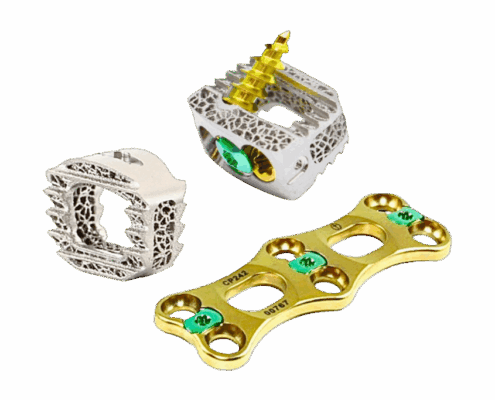
    One of the most visible examples of precision spine care is the rise of patient-specific spinal implants. Additive manufacturing technologies enable the production of implants tailored to a patient’s anatomy based on CT or MRI data.

    3D printing allows for:

    • Customized implant geometry
    • Optimized endplate conformity
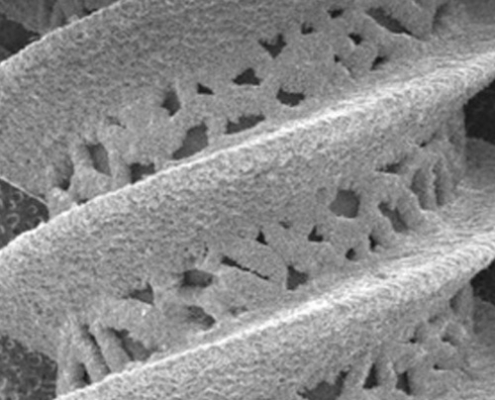
    • Controlled porosity for osseointegration
    • Improved load distribution

    Instead of selecting from standardized sizes, surgeons may increasingly rely on implants designed for individual anatomy. This approach can reduce subsidence risk, improve fixation, and support more predictable fusion.

    While not every case requires a fully customized device, the ability to adapt implant characteristics to patient anatomy signals a major departure from traditional manufacturing constraints.

    Machine Learning and Outcome Prediction

    Precision spine care extends beyond hardware into predictive analytics. Machine learning models are now being developed to forecast outcomes such as:

    • Fusion success probability
    • Complication risk
    • Length of hospital stay
    • Likelihood of readmission

    These models analyze clinical variables including age, bone density, comorbidities, imaging findings, and surgical approach. By integrating these data points, surgeons and healthcare systems can identify high-risk patients and adjust treatment strategies accordingly.

    This predictive capability transforms surgical planning from reactive to proactive. Instead of managing complications after they occur, clinicians can anticipate and mitigate risk before surgery begins.

    Genomics and Pharmacogenomics in Spinal Care

    Another emerging dimension of personalized spinal surgery involves genomics and pharmacogenomics. Genetic profiling may help identify patients predisposed to poor bone healing, abnormal inflammatory responses, or adverse medication reactions.

    Potential applications include:

    • Predicting fusion performance
    • Tailoring pain management strategies
    • Customizing rehabilitation protocols
    • Identifying regenerative therapy candidates

    Although still evolving, genomic data may soon complement imaging and biomechanical analysis in creating comprehensive precision care pathways.

    As research expands, the integration of biological markers into surgical decision-making could further enhance patient-specific outcomes.

    Learn why SI joint pain is often underdiagnosed and how surgical fixation and fusion implants from Eminent Spine deliver lasting relief and stability.

    Learn More

    Data as the Foundation of Precision Spine Care

    At its core, precision spine care depends on data. This includes:

    • Imaging data from CT, MRI, and intraoperative navigation
    • Electronic health records
    • Wearable device metrics
    • Surgical registry outcomes
    • Rehabilitation performance data

    When aggregated and analyzed effectively, these datasets create a feedback loop that improves decision-making over time.

    Hospitals and surgical centers increasingly rely on real-world evidence to refine protocols, standardize best practices, and measure value. In this way, personalized spinal surgery aligns closely with broader healthcare trends toward accountability and measurable performance.

    Precision Care and Value-Based Healthcare

    A common question surrounding precision spine care is whether it is cost-effective or merely theoretical. While advanced imaging, AI tools, and custom implants may increase upfront costs, the long-term value equation often tells a different story.

    Potential economic benefits include:

    • Reduced revision surgery rates
    • Lower complication incidence
    • Shorter hospital stays
    • Faster recovery timelines
    • Improved patient satisfaction

    Value-based healthcare models prioritize outcomes over volume. Precision approaches support this shift by targeting interventions more accurately and reducing variability.

    As reimbursement models evolve, personalized spinal surgery may become not only clinically advantageous but economically strategic.

    The Broader Impact on Surgeons and Healthcare Systems

    The transition from standardized implants to precision spine care requires adaptation. Surgeons must become comfortable integrating data analytics and advanced imaging into their workflow. Hospitals must invest in interoperable systems and training.

    However, the long-term impact may be transformative. Precision methodologies can:

    • Improve surgical consistency
    • Enhance interdisciplinary collaboration
    • Support research and innovation
    • Attract forward-thinking institutional partners

    For investors and healthcare leaders, this shift represents more than incremental improvement. It signals structural change in how spinal care is delivered.

    Eminent Spine and the Future of Personalized Solutions

    As precision spine care reshapes surgical paradigms, adaptable implant systems and advanced material technologies become increasingly important. Eminent Spine continues to monitor and align with emerging trends in data integration, biomaterials innovation, and customizable implant design.

    By developing systems engineered for versatility and performance, Eminent Spine supports surgeons navigating this new era of personalized spinal surgery. Our focus on advanced manufacturing and clinical insight positions it within the broader movement toward individualized care models. Precision is no longer limited to device engineering. It’s becoming a guiding philosophy across spinal medicine.

    Share This Post

    • Share on Facebook
    • Share on X
    • Share on WhatsApp
    • Share on Pinterest
    • Share on LinkedIn
    • Share on Tumblr
    • Share on Vk
    • Share on Reddit
    • Share by Mail

    More Like This

    Cervical Implants Parent Header Image 845x684

    How to Choose a Spinal Implant: A Surgeon’s Guide

    https://www.eminentspine.com/wp-content/uploads/2025/11/Cervical-Implants-Parent-Header-Image-845x684-1.png 684 845 Abstrakt Marketing /wp-content/uploads/2025/08/ES-Logo-Edit-2.png Abstrakt Marketing2026-01-30 03:43:572026-06-23 15:29:20How to Choose a Spinal Implant: A Surgeon’s Guide
    3d Printed Titanium Image

    Comparing 3D Printed Spinal Implants vs Traditional

    https://www.eminentspine.com/wp-content/uploads/2025/08/3D-Printed-Titanium-Image.jpg 500 500 Abstrakt Marketing /wp-content/uploads/2025/08/ES-Logo-Edit-2.png Abstrakt Marketing2026-01-30 03:36:592026-05-18 17:19:11Comparing 3D Printed Spinal Implants vs Traditional

    Categories

    • 3d Pedicle Screw Education & Persuasion
    • 3D Titanium Pedicle Screw
    • Lumbar Fusion
    • Miscellaneous
    • SI Joint Solutions
    • Spinal Implant Education
    • Spinal Implant Innovation
    Es Logo Edit

    Products

    3D Titanium Pedicle Screw System

    SI

    Scoliosis Deformity

    Cervical Implants

    Lumbar Systems

    Prep Sets

    Biologics

    Resources

    Surgical Technique Manuals

    Case Studies

    White Papers & Usage Reports

    IFU’s

    1-2 Page Product Information

    Contact

    2004 Ventura Dr. Ste 250
    Plano TX 75093

    972.499.3593

    [email protected]

    Website by Abstrakt Marketing Group ©
      • Sitemap
      • Privacy Policy
      Link to: Optimizing Fixation in Lumbar Spinal Fusion: Pedicle Screw Design Considerations Link to: Optimizing Fixation in Lumbar Spinal Fusion: Pedicle Screw Design Considerations Optimizing Fixation in Lumbar Spinal Fusion: Pedicle Screw Design Consider...Pedicle Screw Header Image Link to: Surface Technology in 3D Pedicle Screws: Advancing Osseointegration Link to: Surface Technology in 3D Pedicle Screws: Advancing Osseointegration Pedicle Screw Header ImageSurface Technology in 3D Pedicle Screws: Advancing Osseointegration
      Scroll to top Scroll to top Scroll to top

      This site uses cookies. By continuing to browse the site, you are agreeing to our use of cookies.

      AcceptLearn more

      Cookie and Privacy Settings


      How we use cookies

      We may request cookies to be set on your device. We use cookies to let us know when you visit our websites, how you interact with us, to enrich your user experience, and to customize your relationship with our website.

      Click on the different category headings to find out more. You can also change some of your preferences. Note that blocking some types of cookies may impact your experience on our websites and the services we are able to offer.

      Essential Website Cookies

      These cookies are strictly necessary to provide you with services available through our website and to use some of its features.

      Because these cookies are strictly necessary to deliver the website, refusing them will have impact how our site functions. You always can block or delete cookies by changing your browser settings and force blocking all cookies on this website. But this will always prompt you to accept/refuse cookies when revisiting our site.

      We fully respect if you want to refuse cookies but to avoid asking you again and again kindly allow us to store a cookie for that. You are free to opt out any time or opt in for other cookies to get a better experience. If you refuse cookies we will remove all set cookies in our domain.

      We provide you with a list of stored cookies on your computer in our domain so you can check what we stored. Due to security reasons we are not able to show or modify cookies from other domains. You can check these in your browser security settings.

      Other external services

      We also use different external services like Google Webfonts, Google Maps, and external Video providers. Since these providers may collect personal data like your IP address we allow you to block them here. Please be aware that this might heavily reduce the functionality and appearance of our site. Changes will take effect once you reload the page.

      Google Webfont Settings:

      Google Map Settings:

      Google reCaptcha Settings:

      Vimeo and Youtube video embeds:

      Accept settingsHide notification only