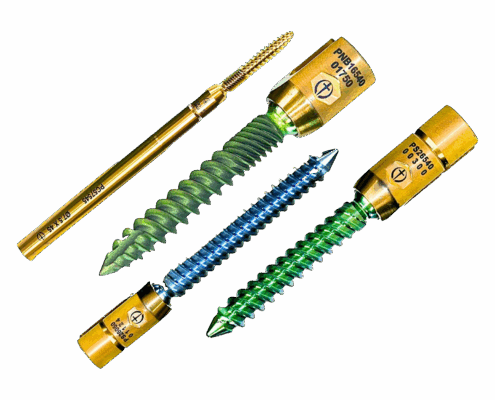
Osteoporosis alters bone at the microscopic level in ways that directly undermine how an implant achieves purchase. Trabecular architecture becomes progressively thinner and more porous, reducing the surface area available for a screw to grip and transferring more mechanical load onto a cortical shell that may also be compromised. For spine surgeons, this means that pedicle screw fixation in these patients carries a substantially higher risk of loosening, pullout, and construct failure than it would in a patient with normal bone mineral density.
The challenge is compounded by the fact that systemic bone assessments do not always reflect local pedicle quality. A patient’s DXA scan provides a broad picture, but the actual condition of the pedicle being instrumented can vary significantly from segment to segment. Surgeons often encounter the true extent of the bone density compromise intraoperatively, when a screw that should seat firmly conveys a disconcerting lack of resistance instead.